Rust Trio Control: How 40,000 Hours Take a Server
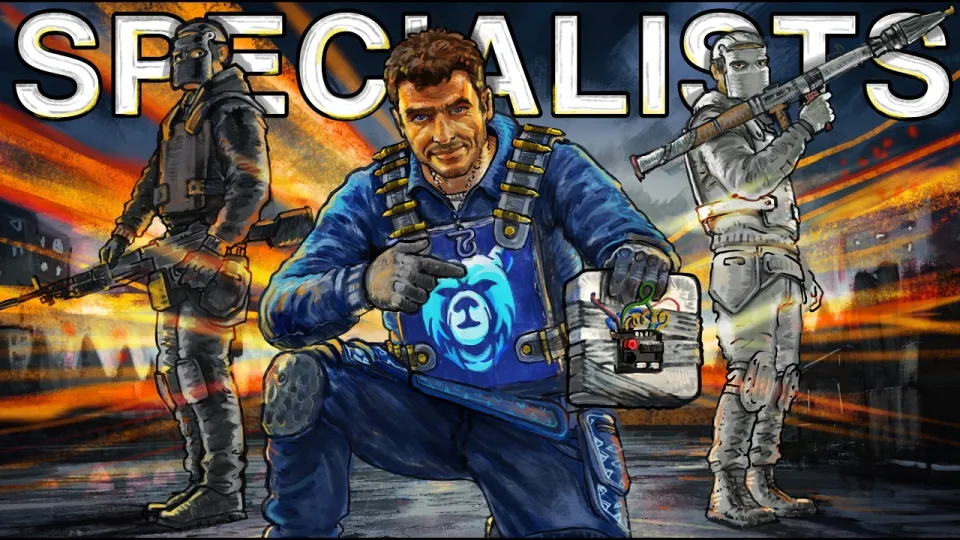
Video: How a 40,000-Hour Trio CONTROLS a SERVER - Rust
Want articles like this for your own video to promote it on YouTube and Google? Order them through the Telegram bot @sat_sit_bot. The bot writes and publishes the articles itself (with your YouTube video embedded) on popular topical websites (no ads). Free trial — 50 articles.
· based on the channel Blooprint
Key takeaways
- Blooprint, Disfigure and Nine bring roughly 40,000 combined hours to a single trio wipe.
- The wipe runs on a 500+ population server, where competition for monuments and loot is constant.
- Control comes from raid tempo, not just PvP: the trio raids the competition before rivals can consolidate.
- Online raids cut both ways — defenders get a chance to hold, and revenge raids follow failed attempts.
- Roaming with top-tier gear like the M2 and L9 is a deliberate risk that pays off in map pressure.
A 40,000-hour Rust trio controls a server by converting experience into tempo: the three players compress the early wipe, secure a resource advantage, and then raid competitors before those competitors can build a defense. In Blooprint's wipe on a 500+ population server, that pattern repeats from the first hours to the final online raids, and the result is a trio that sets the pace everyone else has to react to.
If you want to watch the run live rather than through an edited video, Blooprint streams on Twitch, where the same trio format shows up in real time.
What 40,000 hours actually buys in Rust
Hours in Rust are not a scoreboard — they are a shortcut past the decisions that kill most players in the first two days. A group with that much combined time does not need to experiment with base locations, furnace ratios or monument routes; it already knows which ones survive a wipe with 500+ players online.
The practical advantages stack in a specific order:
- Faster start. Knowing the exact loot routes and crafting order removes dead time between spawning and being combat-ready.
- Better base economics. A compact, layered base costs less to build and less to defend than a sprawling one, and it frees materials for raiding.
- Readable fights. Veterans track sound, sightlines and rotations instead of chasing kills, which is why a trio can beat larger groups.
- Raid math. Sulfur, explosive counts and door paths get calculated before the raid starts, so a failed attempt does not wipe out a day of farming.
- Role clarity. With three players, someone farms, someone builds, someone scouts — and the roles swap without discussion.
None of this is unique to Blooprint's group, but the combination is why a trio can hold ground against clans with more bodies.
Why a trio beats bigger groups on a high-pop server
A trio on a 500+ pop server wins by being harder to find and faster to act than the clans around it. Large groups leak information: more members means more noise, more open doors, more players seen roaming the same grid. Three coordinated players leave a much smaller footprint.
The trade-off is that a trio cannot absorb losses the way a clan can. Every death with a full kit is a real setback, so the group has to balance aggression against gear fear. That tension is exactly what viewers pick up on — some note how refreshing it is to see high-tier weapons like the M2 actually leave the base and get used, rather than sitting in a box as insurance.
The raid economy that turns a wipe into control
Raiding is the mechanism that converts a trio's advantage into server control. On a fresh wipe, the groups that survive longest are usually the ones that raid early and often, because every successful raid removes a future threat and refills the sulfur budget at the same time.
The cycle looks like this:
- Farm with a target. Sulfur and components are gathered toward a specific raid, not stockpiled indefinitely.
- Scout before committing. Door paths, tool cupboard placement and online activity decide whether a raid is worth the explosives.
- Hit the competition, not the easy targets. Raiding a strong neighbor early prevents that neighbor from becoming a problem later.
- Reinvest the loot. Guns, explosives and components from a raid go straight back into the next one.
Online raids complicate this. Defenders can counter, call allies and repair mid-raid, which is why a failed online attempt often turns into a revenge raid against the attacker. Blooprint's content leans into that exchange rather than avoiding it — the onlines are the part of the wipe where control is actually tested.
Base design and skins as part of the strategy
A base in Rust is a cost calculation before it is an aesthetic choice. Compact footprints with multiple layers, well-placed tool cupboards and a door path that forces raiders to spend more explosives than the loot is worth are the standard answer for a small group.
Visual identity matters more than new players expect. Distinctive wall skins — the black catacomb set being a frequent favorite among viewers — make a base instantly recognizable on a crowded server, which cuts down on confusion during fights and makes the group's presence on the map legible to everyone else. Skins do not stop rockets, but recognition is part of the psychological side of holding territory.
What viewers keep asking about these wipes
The recurring questions around long-form Rust videos come from two audiences: players who want to replicate the strategy, and viewers who have never launched the game. Both groups tend to ask the same things.
- Is this staged? Long wipes on high-pop servers involve downtime, farming and quiet stretches that get cut in editing, which can make sudden swings in a fight look suspicious to people unfamiliar with how quickly Rust engagements turn.
- Do you need thousands of hours? No, but the hours show up as fewer wasted decisions — base placement, raid timing and when to disengage.
- Why raid online instead of offline? Online raids produce the fights and revenge cycles that make a wipe memorable, and they are harder to script than a silent offline break-in.
- Why does gear fear matter? A trio cannot replace a lost kit as fast as a clan, so the decision to roam with top-tier weapons is a real risk, not a formality.
For players who have never touched Rust, the appeal is different: the wipe reads as a story with stakes, alliances and setbacks, which is why so many viewers follow entire wipes without playing.
Useful links
- Blooprint on Twitch — live streams of the same trio format
- Blooprint on Kick — alternative streaming platform
- Blooprint on TikTok — short clips from wipes
- Blooprint on Twitter — schedule and announcements
- Blooprint Discord — community and wipe talk
The takeaway from a controlled wipe
Control in Rust is not a single fight or a lucky raid; it is the compounding result of a fast start, a base that is cheap to hold, and a raid schedule that keeps rivals off balance. Blooprint's trio demonstrates the formula at a high population, where the margin for error is thin and every online raid can flip the wipe. The channel Blooprint builds these runs into long-form breakdowns, which is why the video works as a case study even for players who never log in. Watch the next one live on Twitch if you want to see the decisions happen without the edit.
Source: How a 40,000-Hour Trio CONTROLS a SERVER - Rust · Markdown version
Questions & answers
How does a trio control a server with 500+ players online?
By moving faster than larger groups and raiding competitors before they can consolidate. A trio leaves a smaller footprint, farms toward specific raid targets and reinvests loot immediately, so its advantage compounds instead of stalling.
Do you need 40,000 hours to play Rust like this?
No, but experience removes wasted decisions: base placement, crafting order, raid math and when to disengage. A newer player can copy the structure — compact base, early raids, clear roles — without matching the hours.
Why do Rust players raid online instead of offline?
Online raids create real fights, counterplays and revenge cycles, which is where a group's control is actually tested. Offline raids are cheaper but produce no resistance and often fewer lasting results.
Why is gear fear such a big topic in trio wipes?
A trio cannot replace lost kits as quickly as a clan, so taking top-tier weapons out to roam is a genuine risk. Viewers notice when those weapons actually get used, because it signals confidence rather than hoarding.